

2025-09-09 13:58
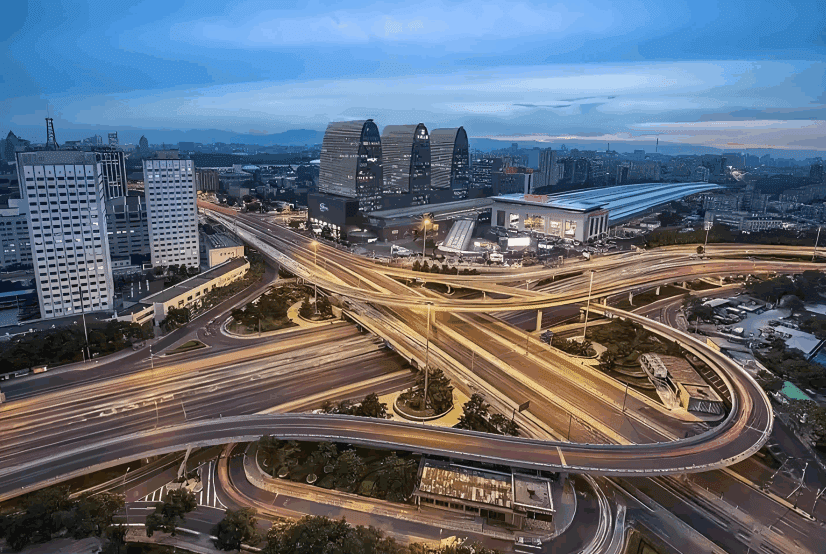
Xicheng at a Glance
As Beijing's core functional zone, Xicheng District serves as the central hub for national politics, culture, and international engagement. It plays a vital role in preserving the capital's historic and cultural legacy, and represents a defining part of the city's image. Covering an area of 50.7 km2, Xicheng is home to 1.095 million permanent residents. In 2024, the district reported a regional GDP of RMB 603.8 billion, with a per capita disposable income of RMB 107,600, and has been consistently named one of “China's Happiest Urban Districts (Municipal Level).”
As the nerve center of China's financial regulatory authorities, Xicheng boasts a dense concentration of financial assets and institutions. The Beijing Stock Exchange (BSE), one of the three major stock exchanges in the Chinese mainland, is located here. The district is also a magnet for corporate headquarters, currently hosting 175, including 21 Fortune Global 500 companies. Xicheng remains the leading choice for global financial institutions entering China — JPMorgan Chase, Goldman Sachs, UBS, and Mastercard have all established their China headquarters in the district's Financial Street.
Investment Services
Beijing Economic Promotion Bureau of Xicheng District
Tel: +86-10-83926782 / 83926825
Email: investxicheng@bjxch.gov.cn
Regional Highlights
Strategic Location
Located in the heart of Beijing, Xicheng covers 50.7 km2 and is home to 1.095 million permanent residents, making it the city's most densely populated district with a population density of 21,600 people per sq km. The district is the political heart of the capital, serving as the core carrier of Beijing's key functions. It is the most concentrated seat of China's central government institutions, hosting the offices of Party and state bodies—including the CPC Central Committee, the National People's Congress, the State Council, and the Chinese People's Political Consultative Conference. Within its jurisdiction are 93 central government agencies at or above the vice-ministerial level, making it the center of policy decision-making in China.
History & Culture
Xicheng is where Beijing's legacy as a capital city began. With over 3,000 years of urban history and 870 years as China's political center, the district stands at the northern terminus of winding, 3,200-km Grand Canal, a UNESCO World Heritage Site. More than a quarter of the district is protected as historic and cultural zones. It also houses 2 World Heritage Sites and 372 immovable cultural relics.
Finance
A Financial Powerhouse
Standing at the center of China's financial management, finance is Xicheng's strongest pillar industry, evidenced by the Beijing Financial Street — a financial powerhouse built over three decades of development. Spanning 2.59 km2, the Financial Street's core area houses over 1,900 financial institutions and more than 200,000 professionals. Institutions based in the district manage assets totaling RMB 150 trillion, approximately one-third of the country's total financial assets.
Beijing Financial Street brings together China's key financial regulatory authorities and infrastructure, including the People's Bank of China, the National Financial Regulatory Administration (NFRA), the China Securities Regulatory Commission (CSRC), the State Administration of Foreign Exchange (SAFE), and the Beijing Stock Exchange (BSE). It also supports a wide range of functions, from financial policymaking and regulation to standard-setting, asset management, payment and settlement, information exchange, and international cooperation.
Business Environment
Xicheng is committed to building a world-class business environment that is internationally competitive, law-based, and efficient.
As China's first Business Environment Reform Demonstration Zone, Xicheng has consistently deepened reforms in streamlining administration, delegating authority, strengthening regulation, and improving public services. Guided by the needs of market participants, it has rolled out a series of reform measures to improve government services, simplify administrative approvals, and facilitate foreign investment. Notable initiatives include the “one-window” integrated service approach and the “one-stop” cross-border investment services, facilitating enterprise and project establishment and growth.
Top-Tier Public Resources
Xicheng is home to 87 kindergartens, 58 primary schools, and 44 middle and senior high schools across 21 education groups.
Its extensive healthcare network comprises 640 medical institutions, including 18 Grade 3A hospitals and 21 tertiary medical facilities, with community-level healthcare service centers covering the entire district.
Xicheng has 18 national A-level tourist attractions, 40 museums, and 121 bookstores.
As one of Beijing's first “Garden City” pilot districts, Xicheng features 94 parks (5 at the municipal level), with a green coverage rate of 32.14%.
Industrial System
Xicheng is accelerating the development of a “4+N” industrial system, with a strong focus on four key industries — finance, fintech, the digital economy, and asset management — while advancing a range of modern service industries, including professional consulting, consumer services, commerce, and cultural industries.
“4+N” Industrial System
Finance Fintech Digital Economy Asset Management Modern Service Industries
Finance
As a national financial powerhouse, financial institutions based in Xicheng manage assets totaling RMB 150 trillion, approximately one-third of the country's total financial assets. At its heart lies Beijing Financial Street, home to the headquarters of all China's major policy and development financial institutions, including the China Development Bank (CDB), Export-Import Bank of China (EXIM), and Agricultural Development Bank of China (ADBC). It also houses the head offices of major state-owned commercial banks, including the Industrial and Commercial Bank of China (ICBC), China Construction Bank (CCB), Bank of China (BOC), and Postal Savings Bank of China (PSBC).
In addition, 60% of the country's major insurance groups, including China Life, PICC, and China RE, are headquartered here. The district also serves as a hub of key national financial infrastructure platforms, such as the Beijing Stock Exchange (BSE), National Association of Financial Market Institutional Investors (NAFMII), China Central Depository & Clearing Co., Ltd. (CCDC), China Securities Depository and Clearing Corporation Limited (CSDC), and NetsUnion Clearing Corporation (NUCC). Leading global financial institutions, including JPMorgan Chase and Goldman Sachs, have also established their presence in the district. Together, these institutions form a diversified and collaborative financial ecosystem, driven by industry-leading institutions and supported by an extensive network of financial service providers.
Fintech
Xicheng is home to the Jinke New Area, China's only national fintech demonstration zone. The area has implemented numerous national pilot programs for fintech innovation and capital market regulation, and now hosts 266 leading fintech firms and specialized service providers, with total registered capital exceeding RMB 140 billion. These include 3 “Little Giant” enterprises, 56 specialized, refined, distinctive, and innovative enterprises, 3 listed companies, and 2 unicorns or unicorn candidates.
Digital Economy
Xicheng District is home to the National Data Administration and China's three major telecom providers: China Mobile, China Telecom, and China Unicom. It is developing a “China Data Street” with the same ambition and standards that shaped Financial Street, aiming to accelerate the growth of the AI and data industries.
Asset Management
Xicheng's commercial asset management institutions collectively manage over RMB 17.5 trillion in assets, accounting for over half of Beijing's total and more than one-eighth of the national total. This is supported by a robust and diverse asset management system that includes banks, securities firms, insurance companies, fund managers, and trust institutions.
Industrial Parks & Innovation Zones
Beijing Financial Street
National Fintech Demonstration Zone (Xicheng)
Putian Desheng Science and Technology Park
New Actuation Fintech Center
Xinhua 1949 Cultural and Financial Innovation Industrial Park
Tianning No.1 Cultural and Technological Innovation Park
Xishiku No. 31 Cultural and Creative Park
Third Block Digital Economy Industrial Park
761 Workshop
White Peacock Culture & Art Creative Industry Base
Economic Daily Park of Beijing Cultural Innovation Workshop (Culture-Technology-Finance Integration Innovation Park of Economic Daily)
National Music Industry Base, China Record Park
RIAMB Lima Incubation Base
Tianheng Financial Technology Innovation Center
Jingyi Rongke Technology Incubator
Jinfenghe Technology Business Incubator
City of Design
“Xinhua 1949” Cultural Industrial Park
Xihai 48 Cultural and Creative Park
Kanghua Weiye Technology Incubator
Cultural Innovation Workshop Economic Daily Park
China Beijing Publishing Creative Industry Park