

2025-09-09 10:48
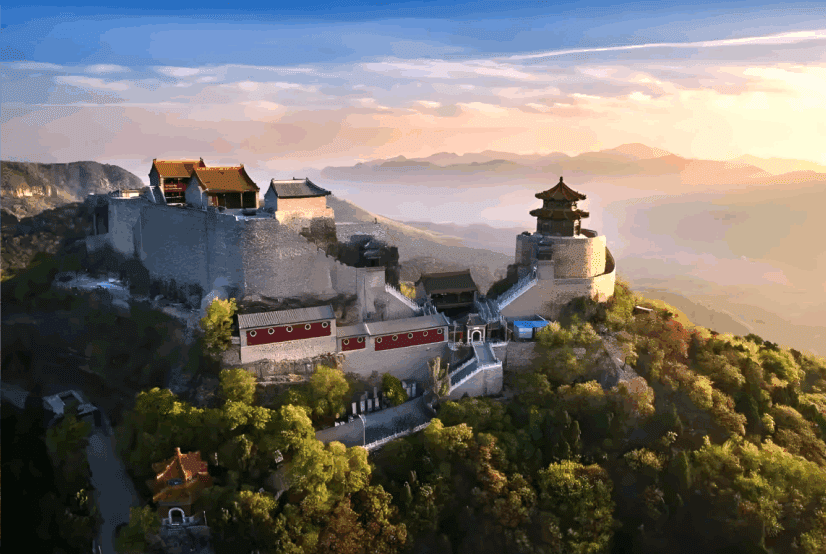
Pinggu at a Glance
Located in northeastern Beijing, Pinggu District is one of the city's ecological conservation zones and a vital link between Beijing and Tianjin. With a permanent population of 455,000, it covers an area of 948.24 km2, and lies 70 km east of central Beijing and 90 km west of central Tianjin. In 2024, the district reported a regional GDP of RMB 57.05 billion.
Investment Services
Beijing Pinggu District Investment Promotion Service Center
Tel: +86-10-89980367
Email: pgqtcjbgs@bjpg.gov.cn
Regional Highlights
Transportation and Connectivity
Well-Connected Transportation Network
Located just 25 km from Beijing Capital International Airport, 50 km from Beijing's sub-center, 110 km from the Port of Tianjin, and 130 km from the Port of Jingtang, Pinggu boasts a well-connected transportation network, and sits at the intersection of the Beijing–Pinggu and Chengde–Pinggu Expressways, Datong–Qinhuangdao Railway, and the Tianjin Outer Ring Road. With Metro Line 22 (Pinggu Line) scheduled to open in 2025, the district is poised to enjoy improved connectivity.
Cultural Heritage
Deep Cultural Roots
Pinggu is a living repository of China's 5,000-year civilization, bearing witness to a human activity dating back 100,000 years to the Paleolithic era, with continuous cultural development through the 7,000-year-old Shangzhai culture, the 5,000-year-old Xuanyuan culture, the 3,000-year-old Bronze Age heritage, 2,200 years of administrative history, millennium-old Taoism tradition, and a 600-year legacy tied to the Great Wall. It is renowned as the “Hometown of Chinese Calligraphy” and the “Hometown of Chinese Couplets,” offering a uniquely vibrant cultural landscape.
Economic Development
Rapid Economic Growth
In 2024, Pinggu achieved a regional GDP of RMB 57.05 billion, a year-on-year increase of 5%. The added values of the primary, secondary and tertiary sectors reached RMB 1.73 billion, RMB 9.92 billion, and RMB 45.39 billion, respectively, rising by 3.1%, 3.3%, and 5.8%.
Agricultural Resources
As a major agricultural hub in Beijing, Pinggu is known for its nationally protected geographical indication (GI) produce, including Pinggu Peaches, Beizhai Red Apricots, and Fojianxi Pears from Maoshanhou Village. The Beijing Pinggu Four Tower Mahogany Walnut Production System has also been recognized as China's Nationally Important Agricultural Heritage. The district currently manages 220,000 mu (approximately 14,667 hectares) of peach orchards, cultivating over 200 peach varieties. With both open-field and greenhouse production, Pinggu's peach season stretches from late March to October, ensuring a supply of fresh peaches across three seasons each year.
Industrial System
"3+3" Industrial System
Three development goals: Develop a world-class innovation hub for urban modern agriculture; establish a central hub serving high-volume logistics in the Beijing–Tianjin–Hebei region; and create a demonstration zone for emerging trends in leisure and tourism.
Three emerging industries: Modern Food and Nutrition Valley, Livestream E-Commerce Industry Innovation Zone, and Pilot Demonstration Zone for Dual-Use Public Infrastructure (for both peacetime and emergency scenarios).
Building the Agricultural Zhongguancun
Pinggu has been entrusted by the CPC Beijing Municipal Committee and the Beijing Municipal People's Government the strategic priority to “build a first-class Agricultural Zhongguancun.” To drive this initiative, the Beijing Municipality and the Ministry of Agriculture and Rural Affairs have signed a cooperation framework agreement to jointly develop the Pinggu National Agricultural Science and Technology Park (Agricultural Zhongguancun). A dedicated five-year action plan and ten targeted initiatives have also been introduced to accelerate development and ensure policy support.
Going forward, Pinggu will actively position itself as the Pinggu National Agricultural High-Tech Demonstration Zone, and collaborate with China Agricultural University to advance the construction of the National Agricultural Science and Technology Innovation Port. The district also plans to establish scientific research platforms, including the Charoen Pokphand International Research Institute and the Agricultural Microbiology International Innovation Research Institute. By hosting events such as the World AgriFood Innovation Conference (WAFI), Pinggu is strengthening international exchanges and cooperation, paving the way for the application and commercialization of innovation outcomes.
Building the Logistics Hub in the Capital
Drawing on its strategic location and resource endowments, Pinggu is advancing the development of the Jingping Comprehensive Logistics Hub, which has fostered five distinctive industrial clusters: agricultural and sideline products, urban new retail, automotive aftermarket services, green mine construction materials, and pharmaceutical and healthcare products.
Looking ahead, Pinggu is striving to establish itself as a national inland port-type logistics hub, transitioning from a conventional logistics park to a modern, integrated logistics system; from a warehousing economy to the hub economy; and from traditional logistics to smart logistics. Efforts are also underway to develop a railway port zone, strengthening its role as Beijing's logistics gateway under the framework of the Belt and Road Initiative.
Building a World-Class Leisure Valley
Pinggu is among the first regions in China to be designated an ”National All-for-One Tourism Demonstration Zone.” Since successfully hosting the Beijing·Pinggu World Leisure Congress in 2021, it has made great efforts to advance the development of all-region tourism. Efforts are underway to build a range of high-quality rural leisure destinations, such as Yuyang Ski Resort and Lehe Yunxiang Rural Resort, fostering the integrated development of agriculture, commerce, culture, tourism, and sports.
Centered around Jinhai Lake, an iconic scenic area in eastern Beijing, Pinggu has attracted major players such as Beijing Energy Holding Co., Ltd. and Wanda Group to invest in developing a core zone of a world-class leisure valley that reflects the highest standards of excellence. Plans include outdoor destinations like Jinhai Lake Camp and Elephant Heron Island, upgrades to boutique rural homestays, and the launch of rural markets like Kaoshanji Market.
Building a Food and Nutrition Valley
Pinggu is home to more than 50 food-related enterprises, including Beijing Capital Agribusiness & Foods Group, Kinghey, Want Want China, Pulmuone, Xibei, Zixingyuan, and Withwheat. These enterprises cover a wide spectrum of sectors — ranging from traditional food processing and central kitchens to prepared meals, food seasonings, and protein R&D — and form one of the district's four key pillars of economic and social development. The district has also forged partnerships with over 20 universities, research institutes, and enterprises, including China Agricultural University, Beijing Technology and Business University, China Academy of Chinese Medical Sciences (CACMS) , Sinolight Corporation, and CP Group.
Developing a Livestream E-Commerce Innovation Zone
With support from the Village Livestreaming College's headquarters and its strong innovation and incubation capabilities, Pinggu is consolidating regional livestream e-commerce resources, focusing on strengthening functions across product selection, brand incubation, consumer engagement, technological innovation in e-commerce, and the distribution of production factors, aiming to cultivate a livestream e-commerce industry cluster valued at over RMB 100 billion.
Pinggu is also expediting the development of a livestream e-commerce industry innovation zone that embodies the spirit of the times, highlights Beijing's distinctive characteristics, and showcases the district's unique local strengths. This endeavor seeks to position Pinggu as Beijing's premier center for innovation in livestream e-commerce. Today, the district is already home to a growing number of leading players, including Ocean Engine, Dongfang Youxuan (Beijing) Technology Co., Ltd., Time With Yuhui (Beijing) Technology Ltd., and Beijing S&S Cultural Media Co., Ltd.
Driving Innovation Synthetic Biology Manufacturing
As a central pillar of the Agricultural Zhongguancun initiative, Pinggu has attracted a growing cluster of leading universities, research institutes, corporate R&D centers, and innovative technology firms specializing in synthetic biology manufacturing — fostering the emergence of an ecosystem that integrates industry, academia, research, and real-world application.
Industrial Parks & Innovation Zones
Pinggu National Agricultural Science and Technology Park
Jingping Comprehensive Logistics Hub
BBMG Digital Supply Chain Industrial Park Project
Beijing (Pinggu) Pet Economy Industrial Park
Zhongnan High-Tech Beijing Agricultural Technology Smart City Industrial Park
Liando U Valley·Innovation Valley
Innovation & Entrepreneurship Center (Zone A)
Innovation & Entrepreneurship Center (Zone B)