

2025-09-08 15:29
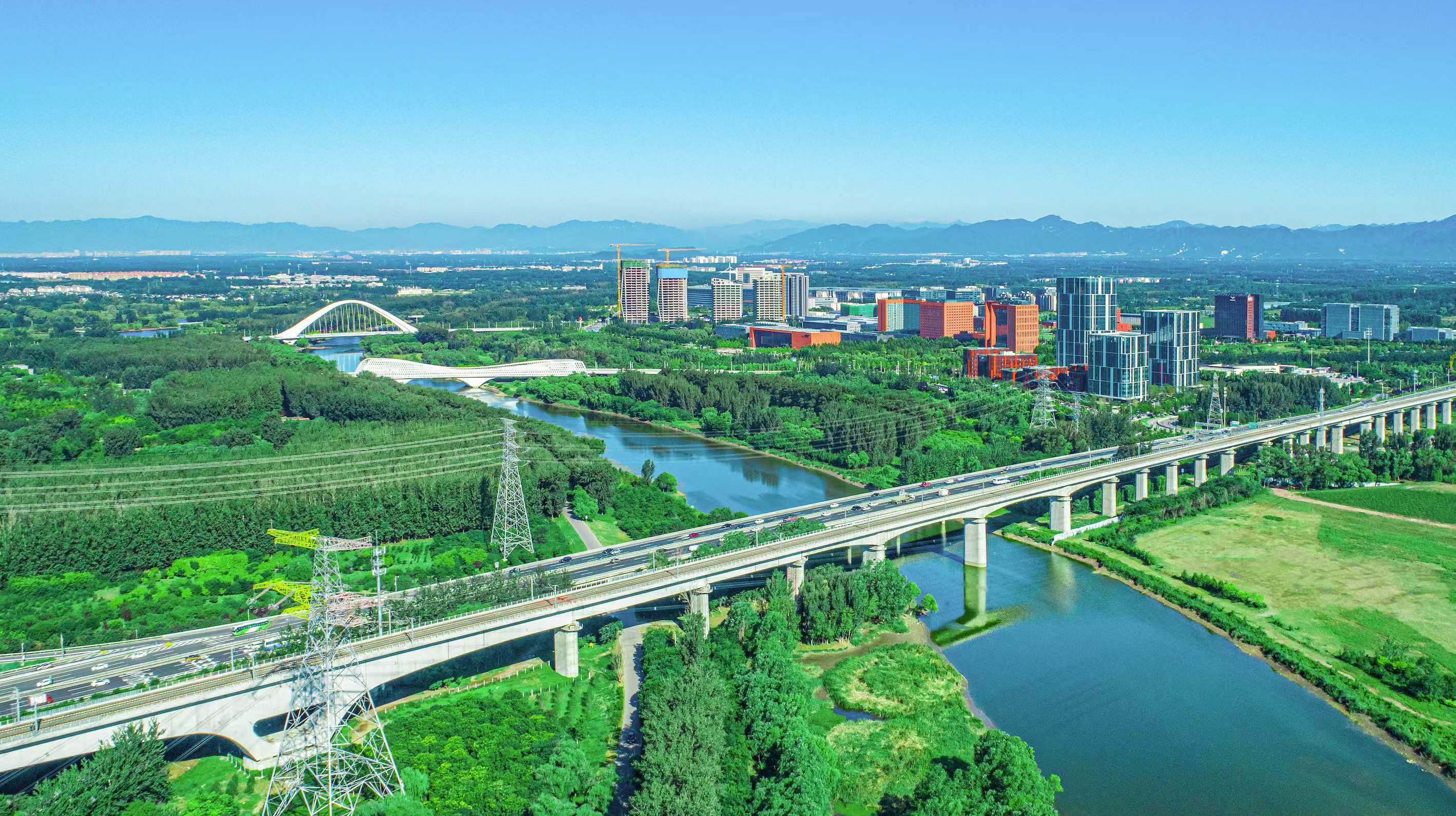
Changping District, located in northwest Beijing, is the capital's youngest urban district and a key area for the development of new urban centers across the plains. As an incubator for new quality productive forces and a hub for future industries, Changping is fast becoming a world-class, modern new urban area that is advanced in education and technology, and valued for its livability and investor-friendly environment. The district spans 1,343 km2, and is home to 2.27 million permanent residents. In 2024, its regional GDP exceeded RMB 180 billion.
Beijing Changping District Investment Promotion Service Center
Tel: +86-10-69726240
Email: touzfwzx@bjchp.gov.cn
Cultural Heritage
Deep Cultural Roots
With a deep-rooted history and a wealth of cultural resources, Changping has long been recognized as “the pillow of the capital” and a strategic stronghold of governance. Its civilization stretches back over 6,000 years, beginning with the Xueshan culture — Beijing's earliest known Neolithic site. Administratively, Changping has more than 2,000 years of recorded history. It was established as Jundu County under the Qin dynasty, became Changping County during the Western Han, and was elevated to Changping Prefecture in the Ming dynasty, when the Yong’an and Gonghua Towns were built.
Changping is the only district in Beijing situated at the intersection of the city’s three major cultural belts: the Grand Canal, the Great Wall, and the Western Hills–Yongding River. It is home to 38 cultural heritage sites protected at the municipal or national level, including the Yinshan Pagoda Forest, Chici Heping Temple, and Baifu Spring. It also boasts two UNESCO World Heritage Sites — the Ming Tombs and the Juyongguan Great Wall. Nestled at the foot of Yanshan Mountain in Changping is the headquarters of the China National Archives of Publications and Culture, widely regarded as the “seed bank” of Chinese culture. In recent years, Changping has introduced new cultural tourism brands, such as the Ming Dynasty Culture Forum.
Innovative Energy
A Thriving Hub of Innovation
Changping plays a key role in Beijing's efforts to become a global center for sci-tech innovation. The district is home to over 10 research institutions, including the National Institute of Biological Sciences (NIBS) and the Chinese Institute for Brain Research (CIBR), as well as 40 state key laboratories and 210 engineering technology centers.
The area boasts a strong concentration of innovation talent, hosting the main and satellite campuses of 41 national key universities, including prestigious institutions like Peking University, Tsinghua University, North China Electric Power University, and China University of Petroleum. More than 48,000 researchers live and work in Changping, among them esteemed academicians and high-level overseas talents. Nearly half of the district's population (44.4%) holds an associate degree or higher.
Changping also offers ample space for innovation-driven growth, with key science and industrial parks such as the Future Science City, Changping Science Park of Zhongguancun Science Park, and the International Medical Device Town. Among them, Future Science City is a flagship project supporting Beijing’s international sci-tech innovation ambitions. Together, these parks form a dynamic innovation framework known as “Two Valleys and One Park” — comprising the Life Science Valley, Energy Valley, and Shahe Higher Education Park.
Natural Environment
Picturesque Haven of Nature
Nestled at the gateway to the Taihang Mountains, the strategic heart of the Juyongguan Pass, and the origin point of the Grand Canal, Changping is the birthplace of the Wenyu River — often referred to as Beijing's mother river — and serves as a vital ecological buffer in the city's northwest. With 60% of its area covered by mountains, a forest coverage rate of 49%, and about 50 km of warm zone stretching along the mountain foothills, Changping is also hailed as “Beijing's backyard garden.”
Changping consistently ranks among Beijing's top districts for air quality. In 2024, its average PM2.5 level was 27.1 µg/m³. Today, the district is celebrated as “northern Beijing’s natural oxygen zone,” and proudly holds national honors such as “National Forest City,” “Garden City,” and “All-for-One Tourism City” — a testament to its thriving ecological environment.
Transportation Network
Extensive and Well-Connected Infrastructure
Dubbed a “city on rails,” Changping boasts over 130 km of rail transit — ranking first among Beijing's emerging plain-area districts. It is currently served by eight rail transit lines (including the Changping Line, Line 5, Line 8, Line 13, Line 17, and the northern extension of Line 19) and six major expressways (including the Beijing–Xizang, Beijing–Chongli, Beijing–Chengde, and Beijing–Urumqi Expressways) that crisscross the region, forming a highly developed road network. From Changping, it takes just 30 minutes to drive to Beijing Capital International Airport and 40 minutes to Daxing International Airport.
The district is developing an urban rail transit system comprising seven express lines and five regular lines. Major projects underway include the Northeast Ring Line and Phase II of Line 19. At the same time, rail transit hubs—such as the Huoying Integrated Transport Hub, Xinlongze Station, and Beiqijia Station—are being developed as micro-centers. These efforts will further strengthen Changping's role as a vital transportation artery, boosting both internal mobility and regional connectivity.
Business Environment
A Premier Destination for Business
Changping makes optimizing the business environment a top priority and a core responsibility of its leadership. Upholding Beijing's high service standards, the district continues to enhance its signature service brands — “Changtongban” (昌通办) and “Changkuaigan” (昌快干) — offering 72 integrated service packages under the “Efficiently Getting Things Done” initiative, delivering full-process, around-the-clock, one-on-one support for businesses.
Changping was the first district in Beijing to launch a white list for administrative inspections and to fully digitize the processing of individual equity transfers. To better support companies in its key industrial parks, the district has also established one-stop service hubs — “Changsheng Posthouse” in the Life Science Valley and “Changneng Posthouse” in the Energy Valley.
With a strong focus on enterprise needs, Changping has implemented a “1+1+N” policy framework and compiled targeted policy lists that eligible businesses can either automatically apply for or benefit from directly. This trigger-based, responsive system ensures instant access to government support and funding — eliminating time-consuming application procedures.
At the same time, improving people's quality of life serves as both the starting point and ultimate goal of all of the district's initiatives. By addressing public needs in education, healthcare, elderly care, and childcare, Changping is steadily evolving into a modern new urban area that is advanced in education and technology, and valued for its livability and investor-friendly environment.
With a strong industrial foundation, Changping is actively building a modern industrial system, focusing on strengthening its three pillar industries — pharmaceuticals and healthcare, advanced energy, and advanced manufacturing. At the same time, it is cultivating two modern service sectors — sci-tech innovation financial services and sci-tech services — while also promoting the integrated development of culture, tourism, agriculture, commerce, and sports, forming a “3+2+1” industrial structure.
Home to nearly 2,000 national high-tech enterprises, Changping is also developing a Beijing Future Industry Pioneer Zone, which aims to establish the district as a global innovation hub for future health technologies, a national platform for the incubation and commercialization of next-generation manufacturing breakthroughs, and a leading demonstration zone for future energy applications.
Pharmaceuticals and Healthcare
Changping is focused on breakthroughs in cell and gene therapy (CGT), AI-driven pharmaceutical R&D, as well as emerging fields such as medical devices, beauty and wellness, and biomanufacturing, with a comprehensive industrial ecosystem covering the full cycle — from basic research and pilot R&D to production, distribution, and clinical application. It is home to renowned institutions including the National Institute of Biological Sciences (NIBS) and Chinese Institute for Brain Research (CIBR), industrial service platforms such as the Beijing Center for Vaccine Control and Bio2, and dedicated biomedical industrial parks — including the Life Science Valley Industrial Base and the International Precision Medicine Industrial Park — that offer integrated spaces for offices, R&D, pilot testing, manufacturing, exhibitions, and talent training.
Today, Changping hosts nearly 2,000 enterprises in the pharmaceuticals and healthcare sector. The Zhongguancun Life Science Park, in particular, has emerged as one of China's most concentrated clusters of life sciences innovation.
Advanced Energy
Changping is emerging as a key player in the advanced energy sector, with strategic priorities in the energy internet, wind and solar power, hydrogen energy, and energy storage. The district has implemented targeted policies to support the growth of the energy internet and hydrogen energy sectors, working closely with central state-owned enterprises, universities, and other regional stakeholders to build a collaborative ecosystem for innovation and growth.
Advanced Manufacturing
Changping is home to Beijing's first two “Lighthouse Factories” (SANY's drilling machinery factory and Foton Cummins), certified by the World Economic Forum (WEF)'s Global Lighthouse Network (GLN). Xiaomi's smart manufacturing factory for smartphones is now in full operation, and multinational giant Novartis Group is expanding its production footprint in the district. It is accelerating the deep integration of internet technologies, big data, and artificial intelligence into manufacturing, driving the digital and intelligent development of its industrial base.
Modern Service Industries
Sci-Tech Services
Changping has launched the Action Plan for High-Quality Development of Sci-Tech Services,
introducing platforms such as the Changping Scientific Research Instrument Sharing Service Platform and the Medical Device CMO Service Platform.
It has been designated as a national pilot zone for building intellectual property strength.
In 2024, revenue from the sci-tech services sector grew by 8.1%.
Sci-Tech Innovation Finance
Changping is developing a demonstration zone for sci-tech innovation finance.
It has launched the Action Plan for High-Quality Development of Sci-Tech Innovation Finance, outlining 7 major projects and 21 targeted support measures, integrating key resources including industrial space, sci-tech, capital, and talent.
Integrated Development of Culture, Tourism, Agriculture, Commerce, and Sports
Leveraging its world cultural heritage sites, such as the Ming Tombs and the Juyongguan Great Wall, Changping is promoting the fusion of traditional culture with modern civilization. Flagship events include the Ming Dynasty Culture Forum and “Juyong Shanyue” (Juyong Mountain Moonlight), supporting the district's efforts to integrate the culture, tourism, agriculture, commerce, and sports. These efforts are also enhancing rural tourism and increasing local farmers' incomes.
Synthetic Biomanufacturing
As one of Changping's key focus areas for future industry development, synthetic biomanufacturing is rapidly taking shape as a strategic industrial cluster. To date, 86 synthetic biomanufacturing enterprises have established a presence in the district.
Changping has taken the lead in Beijing by releasing the Action Plan for the Development of the Biomanufacturing Industry in Changping and the Interim Measures to Support the High-Quality Development of the Synthetic Biomanufacturing Industry in Changping District. It is also the first to establish a dedicated industrial cluster for synthetic biomanufacturing, strategically aligned with the district's three pillar industries: pharmaceuticals and healthcare, advanced energy, and advanced manufacturing.
Robotics
Changping is one of Beijing's two key development zones for robotics, serving as the northern hub in the city's strategic layout.
The district is developing a demonstration zone for robotics research and industrial applications in northern Beijing.
Changping is building a “1+5+1” industrial framework, guided by a “one core focus supported by multiple nodes” development model.
It has introduced the Three-Year Action Plan for the Innovation and Development of the Robotics Industry in Changping District and Special Support Measures, along with a set of ten targeted support measures. These focus on advancing key areas such as core technology innovation and the establishment of public service platforms. The goal is to create a “Changping model” that contributes to Beijing's vision of becoming a global benchmark for digital economy excellence.
6G
Changping has adopted an innovative “one core, two wings, and two integrations” strategy for its 6G industry development.
It has launched the Action Plan for the 6G Innovation Industry Cluster, aiming to build a flagship hub for 6G development in the capital with distinctive Changping characteristics.
The district plans to create benchmark 6G application scenarios and leverage the technology to drive growth in key sectors including pharmaceuticals and healthcare, advanced energy, and advanced manufacturing.
Future Science City
Zhongguancun Life Science Park
Beijing Robotics Industrial Park (Changping)
Changfazhan AI Acceleration Center
Tsinghua University Nankou State Key Laboratory Base
International Medical Device Park
Changping National Agricultural Science and Technology Park
SINOVAC Laifu City (SINOVAC High-End Technology Achievement Transformation Base)
Changfazhan·Yunji Center
Changfazhan·Tiantong Science and Technology Park
Changfazhan·Sci-Tech Innovation Center
Changfazhan·Longyu Center
Changfazhan·Singularity Center
International Precision Medicine Industrial Park of Changping Life Science Valley
East Zone of International Medical Device Park
Life Science Valley in the West Zone of Future Science City